
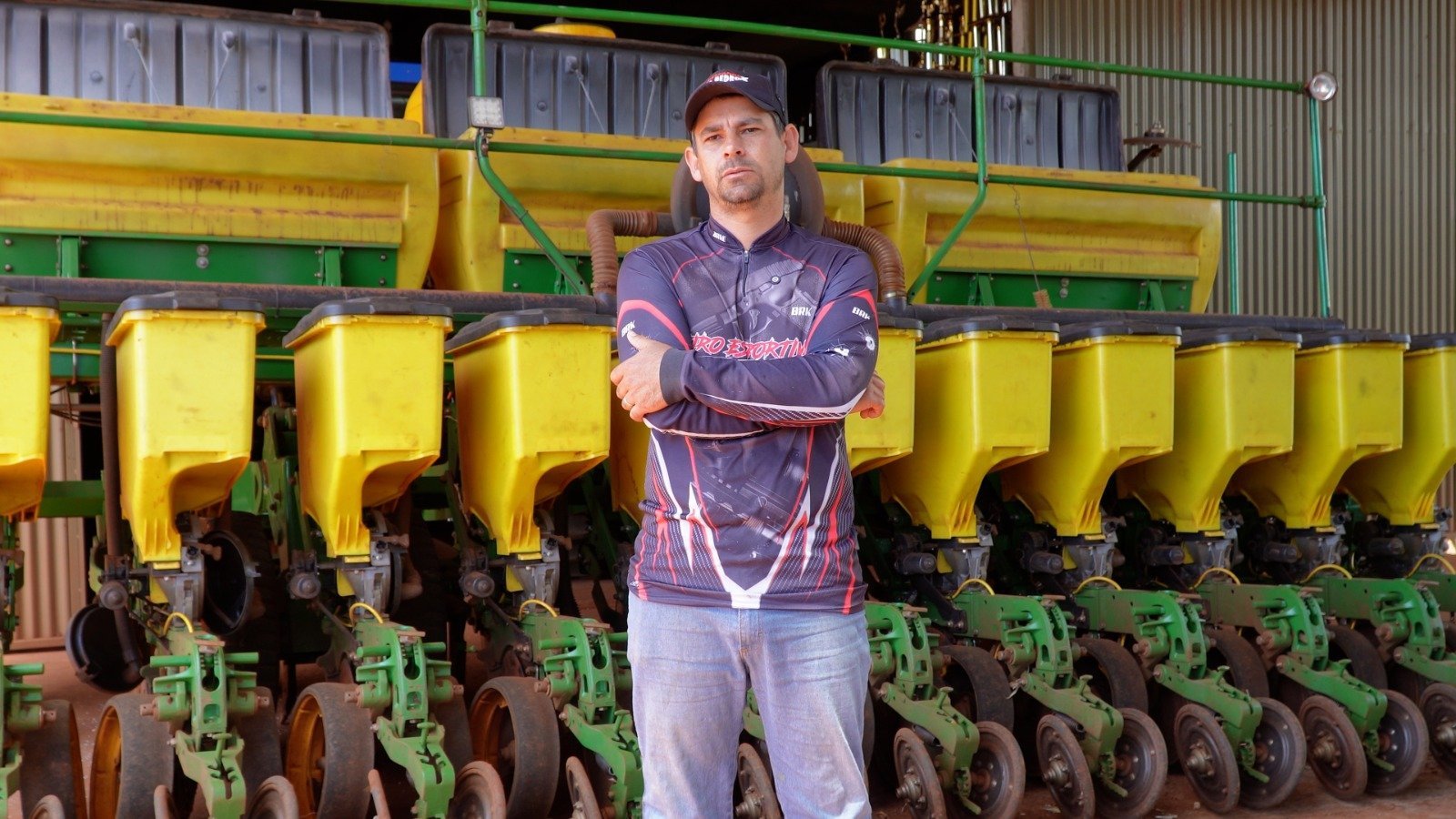
Some time ago, farmer Fabiano Malaquias, from Bragantina (Assis Chateaubriand municipality – PR), was looking for a solution to modernize his planter, used for planting soybean and second-crop corn. The answer to this search was the Electronic Control for Planters, one of Fortron's retrofit solutions. "We had been looking for a system like this for a long time," he says.
The decision was made after careful research, where cost-benefit proved decisive: "We liked the value too. It wasn't absurd or anything. So we decided to install this one."
The Planter Retrofit Process: "Very Practical, Almost Nothing Changes"
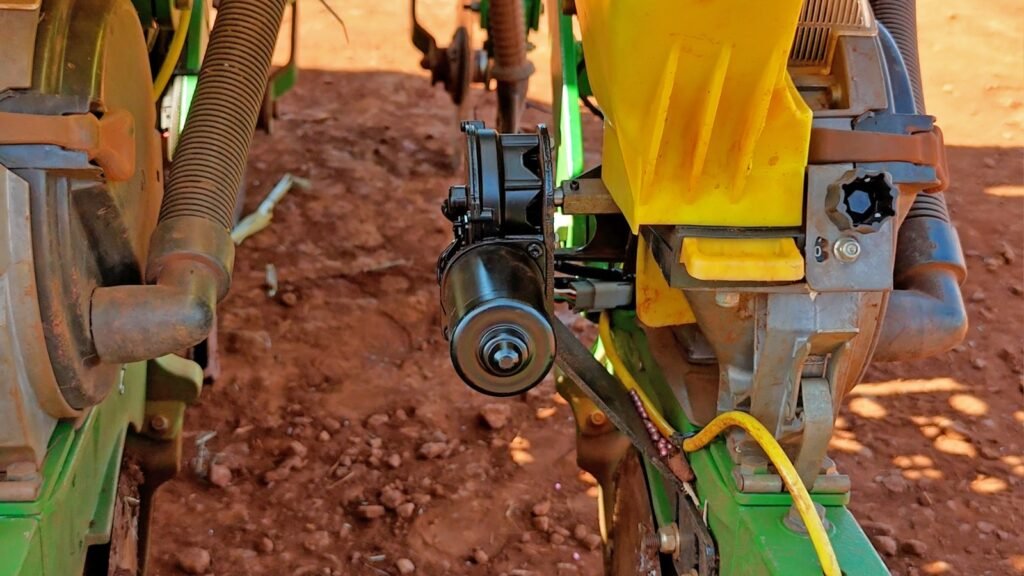
One of the biggest fears when modifying trusted equipment is the complexity of the installation. However, the retrofit process to install Fortron's individual electric motors Fortron surprised Fabiano
"The installation was very practical," he states. "It changes nothing, almost, on the planter."
This phrase is the essence of Fortron's solutions: the machine the farmer already knows and trusts remains the same, but its operational "brain" and "muscles" are replaced by high-performance technology. "Easy maintenance, everything very calm," he adds.
Upgrade Results: Operation 100% Better with Electronic Control
1. The End of Chains and the "Cage": The Practicality of ISOBUS
The transformation was radical. The Fortron upgrade effectively took Fabiano's mechanical planter to the era of precision.
One of the most felt changes was in the cab. Total integration via ISOBUS allowed all control to be done directly on the tractor's original screen.
"The operation part improved 100%," he celebrates. "Now it controls everything through the tractor screen, right? The other monitors we had, we took them all out."“
The dirty and time-consuming work of manual adjustment gave way to digital efficiency. "If you want to change seeds per meter[variable rate]... everything is easier, right. No need to touch chains, change gears, those things. Much more practical."
2. Precision that Pays for Itself: How Row-by-Row Shutoff Generated Seed Savings
The biggest impact of the retrofit was felt in the pocket. The installation of row-by-row shutoff directly attacked waste on two fronts: headlands (turning areas) and general input planning.
First, overlapping ended. "The advantage is [in] the headland, not to keep overlapping seeds, right. As they say, it's a waste of seed," explains Fabiano. The result is not just savings, it is agronomic: "Where it overlaps, there is a lot of competition [between plants].
The efficiency of the system was so great that Fabiano even managed to optimize his strategy. "We even increased the quantity of grain per meter a little... and managed to do it with the seed we used before. Before it was still missing, now we manage to close with the same amount."
The final result in the field was visible: "The seed distribution becomes very uniform... It turned out excellent."
The Farmer's Verdict: "Simple System, Maximum Savings"
For Fabiano Malaquias, the retrofit proved to be the smartest decision. He now owns a planter with cutting-edge technology without having paid for a new one.
"I would recommend it, the practical system. To handle everything, as they say. Savings, right, of seeds, everything. As they say today, we have to try to save as much as possible, right."
He finishes by reinforcing what every farmer wants to hear: "It is a simple system to operate, not complicated at all. A really good system."
You don't need to change machines to have the best technology. Do like Fabiano: with Fortron Electronic Control. com o Controle Elétrico Fortron.
Click here to learn about the Fortron Electronic Control solution.
 Portuguese
  English